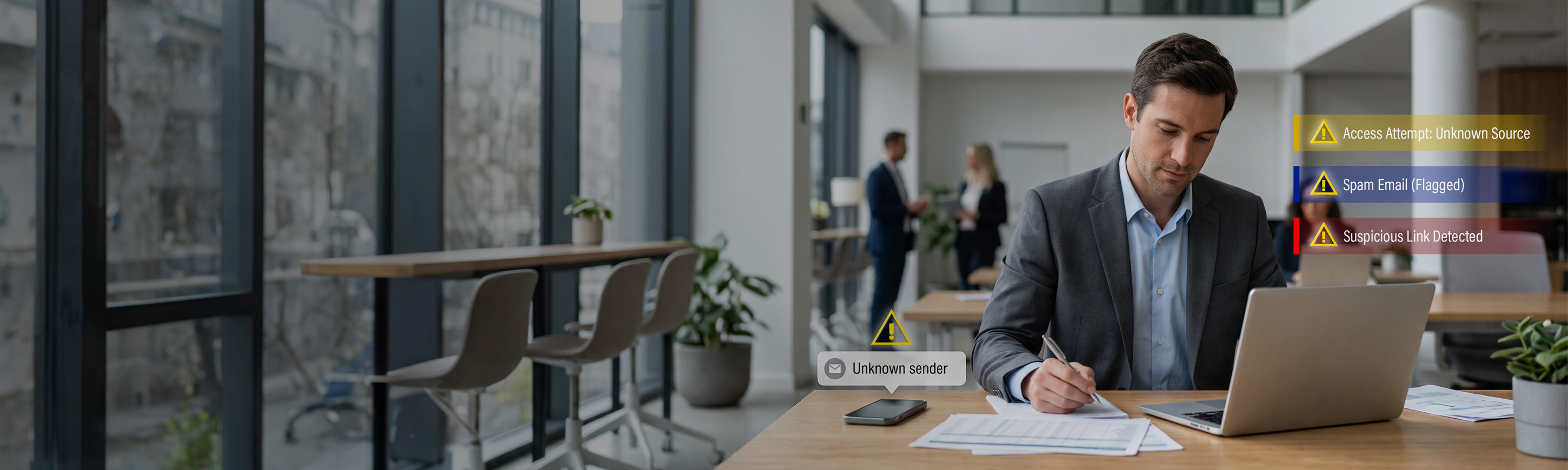
Smarter Cybersecurity in an AI-Powered World
October is Cybersecurity Awareness Month, an annual opportunity to focus attention on the digital threats that affect individuals, businesses, and organizations every day.
The 2026 theme, “Securing the Next 250,” looks toward building a more resilient digital future. While that includes protecting the systems and infrastructure our communities depend on, stronger cybersecurity also starts much closer to home.
For individuals and small businesses alike, one of the most valuable habits today is surprisingly simple: think before you trust.
Cyber threats are becoming harder to recognize at a glance. A message may sound professional. A website may look legitimate. A caller may sound like someone you know. As technology makes deception more convincing, protecting yourself increasingly means knowing when to pause, verify, and ask questions before taking action.
Knowing What to Trust Is the New Cybersecurity Skill
For years, cybersecurity advice often focused on spotting obvious warning signs. Look for misspelled words. Be suspicious of strange email addresses. Avoid websites that don’t look professional.
Those clues can still matter, but they’re no longer enough.
Today’s scams can arrive through email, text messages, phone calls, QR codes, websites, and even authentication requests. Criminals may impersonate a bank, vendor, employer, government agency, or someone you know. Caller ID can be spoofed, fake login pages can closely resemble legitimate sites, and unexpected authentication requests can be used to try to access accounts.
Instead of asking only, “Does this look real?”, ask: “How can I independently verify that it is real?” That small shift in thinking can make a meaningful difference.
How AI Is Changing Cybersecurity
Artificial intelligence is one reason verification has become even more important.
AI can help criminals create polished emails, convincing scripts, personalized messages, and other communications faster and at greater scale. It can eliminate awkward wording or obvious mistakes people once relied on to spot scams. AI-generated voice or video can also make impersonation attempts more believable.
That doesn’t mean every unfamiliar message should create alarm. It means appearances alone should not determine whether you trust a request involving money, passwords, sensitive information, or access to an account.
Good cybersecurity increasingly requires good judgment.
For a deeper look at AI-enabled phishing, deepfakes, look-alike websites, QR-code scams, and other emerging threats, read our article on AI Cybersecurity.
Pause, Verify, Then Act
Rather than memorizing every new scam, build verification into how you respond to unexpected requests.
Use a trusted channel. If you receive an unexpected message claiming to come from your bank, a vendor, an employer, or even someone you know, verify it using contact information you already trust. Don’t rely on the phone number, link, or contact details provided in the message itself.
Treat urgency as a reason to slow down. Scammers often create urgency or secrecy to encourage people to act before they have time to think. A request demanding an immediate wire transfer, password reset, payment change, or disclosure of sensitive information deserves additional scrutiny.
Don’t approve something you didn’t initiate. An unexpected multifactor authentication prompt, password-reset request, or login approval could indicate that someone is attempting to access your account. Deny requests you didn’t initiate and investigate before proceeding.
Protect sensitive information before sharing it. Handle passwords, authentication codes, account information, customer data, and other confidential information carefully. Before providing sensitive information online or over the phone, make sure you know who is requesting it and why.
For additional steps you can take to safeguard personal information and respond if it becomes compromised, explore our article on How to Prevent Identity Theft.
The common thread isn’t fear. It’s verification.
What Verification Looks Like in Everyday Life
The same principle applies whether you’re protecting a personal account or running a business.
For an individual, verification might mean receiving a call that appears to come from your bank, hanging up, and contacting the bank yourself through a number or channel you know is legitimate.
For a business owner or employee, it might mean receiving an email saying a trusted vendor has changed its payment instructions and confirming that change directly with a known contact before sending funds.
The circumstances may differ, but the habit is the same: verify before you act.
That matters particularly when a request involves money. An email from a familiar name, a convincing phone call, or an urgent message shouldn’t replace an established verification process. Taking an extra moment to confirm a request can be far easier than trying to recover from fraud after the fact.
U.S. Century Bank Is Here to Help Protect You
Cybersecurity is a shared effort, and you don’t have to navigate it alone.
U.S. Century Bank uses security measures designed to help safeguard personal and business account information, including encryption technology for its website. We also remind customers that our representatives will not unexpectedly call or email asking for sensitive information such as account numbers, passwords, PINs, card numbers, or Social Security numbers.
Just as importantly, our team is accessible when something doesn’t seem right.
If you receive an unusual call, message, transaction, or request involving your account, contact U.S. Century Bank directly through a trusted channel. If you believe fraud or identity theft may have occurred, reach out to us promptly so we can help you determine the appropriate next steps.
Technology will continue to evolve, and the ways criminals attempt to exploit it will evolve too. You don’t have to anticipate every new scam or understand every new technology. What matters is developing the judgment to recognize when something deserves a second look.
Pause. Verify. Ask questions.
As Cybersecurity Awareness Month begins, make those habits part of your everyday cybersecurity routine. And remember, when something doesn’t feel right, U.S. Century Bank is here to help you protect what matters.
HELPING YOU GROW YOUR BUSINESS - BUILD A STRONG FUTURE
Small Business Administration (SBA)